As the search continues, a growing public focus has emerged around Tommaso Cioni, Nancy Guthrie’s son-in-law, following the FBI’s release of a preliminary suspect description based on security-camera footage. At the center of the discussion: height, build, movement — and a narrow window of time just minutes before Nancy vanished.
Authorities stress that the investigation is active and evolving. Yet as official details intersect with controversial media reporting and online speculation, the case has ignited intense debate — and unease.
The FBI Description That Sparked a New Wave of Questions
In an effort to generate credible leads, the Federal Bureau of Investigation released a forensic assessment of a person seen on video shortly before Nancy Guthrie disappeared.
According to investigators, the individual captured on camera is described as:
-
Estimated height: approximately 5’9” to 5’10”
-
Build: average
-
Clothing: dark attire
-
Accessories: a black Ozark Trail Hiker Pack backpack (approximately 25 liters)
-
Appearance: face covered by a mask or balaclava, gloves worn
-
Additional detail: the individual may have been holding a visible object, possibly a weapon

Officials emphasized that the description was produced by the FBI’s technology and forensic imaging division and is intended solely to assist the public in identifying credible information, not to declare a suspect.
Still, once released, the description quickly became a focal point for public comparison.
Why Height Became a Flashpoint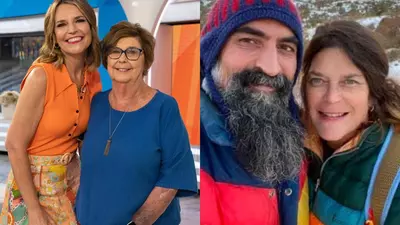
Within hours of the FBI bulletin, online discussions erupted — particularly around height.
Social media users, independent commentators, and armchair analysts began comparing the suspect’s estimated stature with publicly available images of individuals connected to Nancy Guthrie’s family.
Among those comparisons was Tommaso Cioni.
Some online observers claimed Cioni appeared taller than the FBI’s estimated range, citing posture, stance, or perceived proportions
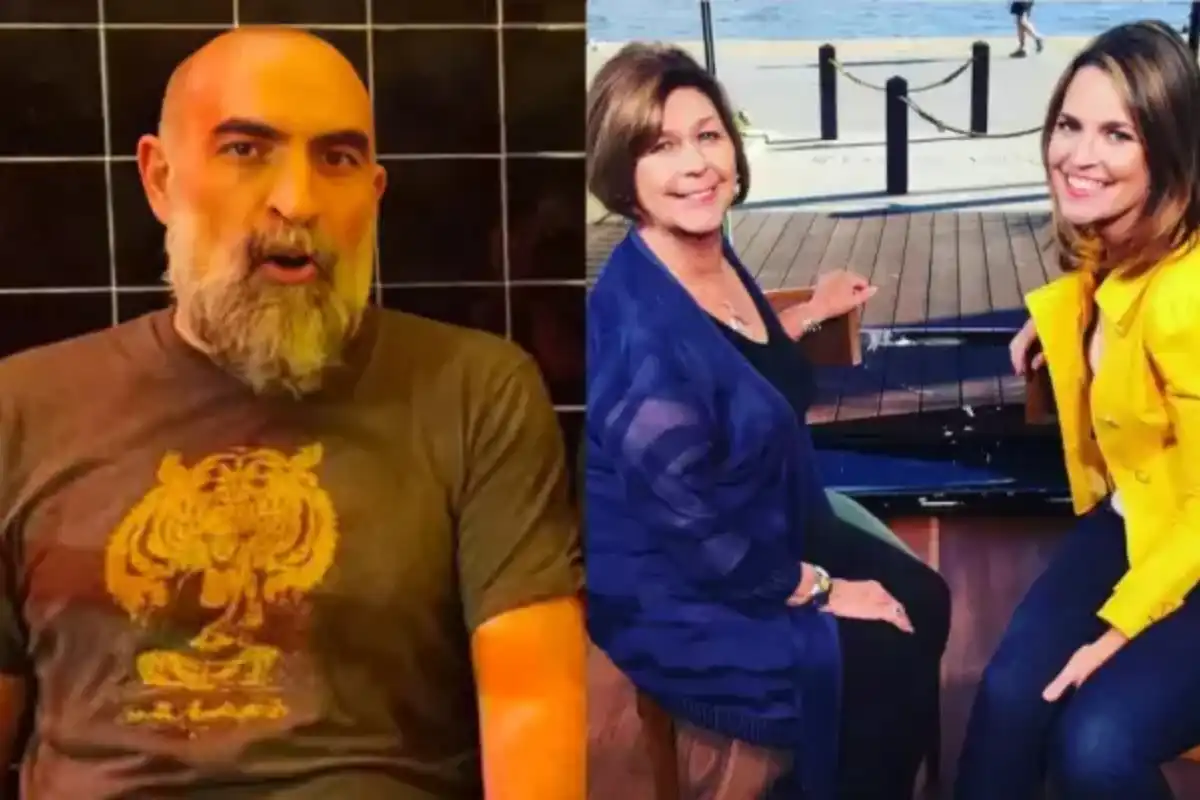
in photographs. Others pushed back, arguing that perspective distortion, footwear, and camera angles make such judgments unreliable.
One widely shared family photograph appeared to show Cioni standing close in height to Savannah Guthrie, who is often reported to be around 5’10”. That comparison led some users to argue that Cioni could plausibly fall within the FBI’s stated range — while others insisted he appeared taller.
Crucially, Cioni’s exact height has never been publicly confirmed, leaving the debate unresolved.
Authorities have repeatedly warned against drawing conclusions based on physical resemblance alone.
What Investigators Have — and Haven’t — Said
Law enforcement agencies involved in the case have been careful with their language.
The Pima County Sheriff’s Department previously stated that investigators had “not identified a suspect or person of interest” at that stage of the investigation, cautioning that speculation could hinder progress.
Officials maintain that the FBI description is part of an evidence-gathering process, not a declaration of guilt.
However, the absence of definitive answers has created a vacuum — one increasingly filled by media narratives and leaked claims.
Ashleigh Banfield’s Reporting — and the Official Pushback
Fuel was added to the fire when journalist Ashleigh Banfield reported that Nancy Guthrie’s son-in-law was allegedly considered a “prime suspect,” citing what she described as a trusted law enforcement source.
The claim drew immediate attention — and swift rebuttal.
The Pima County Sheriff’s Department publicly disputed the report, stating that investigators had not named a suspect, and warning that the spread of unverified accusations was “irresponsible” and unhelpful to the case.
Despite the pushback, Banfield later doubled down during an interview with Dan Abrams, insisting that her source stood by the reporting.
The Interview That Intensified Scrutiny
Appearing on Abrams’s SiriusXM show, Banfield described what she characterized as early investigative concerns — while acknowledging the fluid nature of criminal investigations.
She cited several developments she said were later confirmed, including:
-
A vehicle linked to Annie Guthrie being towed and placed into evidence
-
Cameras allegedly tampered with or damaged, with reports of glass fragments found beneath a camera mount
-
Questions surrounding a side or rear entrance and whether it had been left unsecured
-
Law enforcement activity at the residence, including extended nighttime searches and evidence collection
Banfield emphasized that investigations often shift as new information emerges, noting that early theories can be revised or discarded as evidence evolves.
Still, her remarks fueled further public scrutiny of Cioni and the household.
The Timeline That Won’t Go Away
One of the most troubling aspects of the case remains the timeline captured on video.
Sources familiar with the footage say a man was seen near the side entrance of the home just minutes before Nancy Guthrie disappeared, appearing to adjust or manipulate something out of view of the camera.
Later, according to multiple reports, another man was allegedly seen leading Nancy away from the property.
Investigators have not publicly confirmed the identities of either individual — nor clarified whether the two events are connected.
But the proximity in time has become impossible to ignore.
Facial Recognition and Public Interpretation
Recent reporting suggests that facial recognition technology was used to analyze footage, leading to a potential match with Tommaso Cioni. Officials have not publicly confirmed the outcome of such analysis.
Experts caution that facial recognition — particularly when faces are partially obscured — is not definitive proof, but rather an investigative tool used to narrow possibilities.
Even so, the suggestion alone has intensified attention.